“Well done,
good and faithful servant.”

Albert Martin was a faithful servant—one of the most influential Reformed Baptist pastors of our time. Sorry to hear that he has died, but happy for him! I was privileged to write a chapter in a book dedicated to him a couple years back.menu_book A Workman Not Ashamed — Essays in Honor of Albert N. Martin

A preacher who had a profound influence on me as a young Christian has gone to be with the Lord. Albert N. Martin is now with Christ. At College he was one of two preachers I listened to almost daily. I met him a few times and really felt that I was in the presence of a godly man who truly feared the Lord. I thank God for Al Martin.
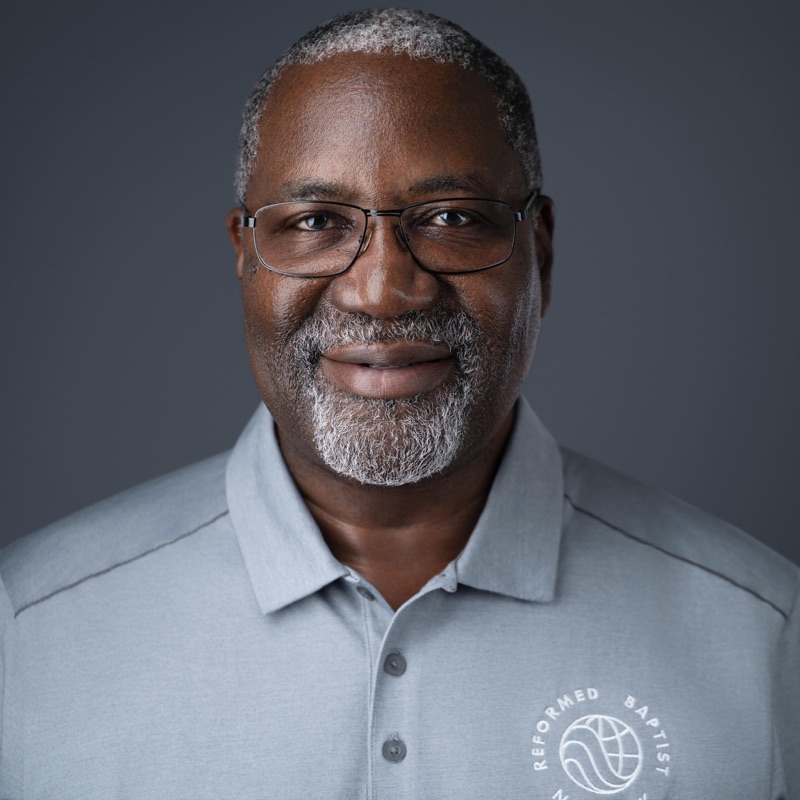
Yesterday, I woke up to the news that Al Martin had graduated to glory. My good friend Ronald Kalifungwa broke the news to me. To say that this man greatly impacted my ministry through his preaching and example is an understatement. I expressed myself to his honor in this book. It's indescribable. Farewell brother. Farewell!
In Memoriam: Dr. Albert N. Martin
With a mixture of sorrow and rejoicing, we mark the passing from the church militant to the church triumphant of Dr. Albert N. Martin, a beloved friend, faithful pastor, and valiant soldier in the army of King Jesus, who died yesterday on the cusp of turning 92. For decades, he stood as a pillar in the Reformed world—known for his solid, detailed, enlightening, powerful, and faithful preaching of God's Word and his steadfast, discerning, and unwavering commitment to all of its truths. His departure leaves a nostalgic void, not only among those who knew him personally and those who were members of his beloved Trinity Baptist Church of Montville, New Jersey, but across a much broader fellowship of churches and believers who were nourished by his ministry throughout the English-speaking world.
To many of us, Al Martin was more than a preacher of righteousness; he was a trusted friend, a wise counselor, and a brother deeply knit to our hearts in the bonds of the gospel. His friendship was marked by sincerity, love, and spiritual warmth. He possessed that rare combination of theological precision and pastoral tenderness, speaking the truth with clarity while carrying the burdens of Christ's flock with compassion. His counsel was never shallow, never rushed, but always seasoned with Scripture and rooted in a profound communion with his Lord.
In an age often marked by theological compromise and superficiality, Al Martin stood firm. He was not swayed by trends nor intimidated by opposition. Like a watchman on the walls of Zion, he sounded forth the whole counsel of God with courage and conviction. His preaching bore the marks of careful exegesis, experiential depth, and earnest application, pressing divine truth upon the conscience with solemn urgency.
We grieve because such men are not easily replaced. The ranks of those who have labored long in the trenches, who have weathered storms, and who have remained faithful unto old age, seem to grow thinner with each passing year. And yet, we do not grieve as those without hope. For while the church militant feels the loss, the church triumphant rejoices in gain.
Personally, I owe a lot to Al Martin beginning about a half century ago when I listened to all his cassette tape lectures to his theological students with great profit. My own personal friendship with him didn't flourish until about a few decades ago when he was still in New Jersey after I persuaded him that he should start a writing ministry. He insisted that he had no gifts to write and I insisted that his sermons reveal that he has excellent gifts for writing. He replied that he didn't even have a computer and I insisted that he should get one and have someone teach him how to use it. He followed my advice and sent me a manuscript on the Holy Spirit's role in preaching less than a year later. I then asked him to edit all the much-circulated cassette tape lectures to his theological students and publish them in a multi-volume set. He did even more! He traveled back to New Jersey from Michigan to record them all in an improved version, published the whole set in three volumes, and asked me to preface the first volume because, in his words to me, "You are the brother who taught me that I had a gift I didn't know that I had and who also persuaded me to revisit these old theological lectures to prepare them for press." While in Michigan, we frequently had three-hour lunches together; I also invited him to speak for our seminary conference and for some chapel messages—all of which were memorable events.
Brother Al Martin has now entered into the presence of the King whom he so faithfully served. The voice that once proclaimed Christ to others now joins the song of the redeemed around the throne. The labors of decades have given way to eternal rest. The battles are over; the victory is secure. He is now ever with the Lord—seeing by sight what he long embraced by faith.
What a comfort it is to know that the gospel he preached is the gospel that has brought him safely home. The Christ he exalted has now welcomed him with the words, "Well done, good and faithful servant."
May the Lord raise up others in his stead—men of like conviction and devotion. And may we who remain be stirred by his example to greater faithfulness, until our own course is finished and we too are gathered to be forever with the Lord.
A True Great-heart
"He is one of the ablest and most moving preachers I have ever heard. In recent years I have not heard his equal." — Professor John Murray, 1967
Professor John Murray, of Westminster Seminary in Philadelphia, was a favorite at the Leicester Conference for Ministers in England. He had helped found the conference, and his influence was widespread. The established tradition at the conference was that Murray would take the final session.
But in 1967, Murray wrote the following note to one of the conference organizers, Iain Murray: "If Al Martin is to be there, I really think he should be asked to take the three evening services you propose for me. He is one of the ablest and most moving preachers I have ever heard. In recent years I have not heard his equal. My memory of preachers goes back sixty years. So, when I say he is one of the ablest, this is an assessment that includes very memorable preachers."
Life Story
Albert N. Martin was born on April 11, 1934, in Alexandria, Virginia. He was the second of 10 children. Near the end of 1951 and the beginning of 1952, God began to do a real work of grace in his heart. Natively timid, he found a great boldness in confessing Christ as a teenager. Shortly after his conversion, he began street preaching. He saved his money for a Thompson Chain-Reference Bible and devoured the Scriptures.
In 1956, he graduated from Columbia Bible College; was married to his first wife, Marilyn; and began an itinerant ministry. On one occasion, he preached at a chapel service at Wheaton College. After the service, an elderly man came up, took his hand, and simply said, "Thank you, young man. As you preached the text came to mind, 'He was a burning and shining light.' When you preached there was light and heat." That man was Merrill Tenney, and the heat and light continued to burn for several decades.
From 1962 until the end of 1966, Martin was the pastor of the Alliance Church in North Caldwell. In September 1967, the church reconstituted, embracing the 1689 Baptist Confession of Faith, and became Trinity Baptist Church, ultimately settling in Montville, New Jersey. Martin faithfully shepherded that congregation until his retirement in 2008.
For many years, Trinity Baptist Church trained men for ministry at the Trinity Ministerial Academy. Martin's pastoral theology lectures there were rich, and thankfully, he put them into print. Martin's influence on several generations of preachers is undeniable. I'm one of many who benefited from his preaching, teaching, and friendship.
Martin's Influence
In 1990, a fellow seminarian handed me a sermon by Martin on cassette. I listened and was gripped by the way the Scriptures were proclaimed and applied. This was powerful, persuasive, brink-of-eternity preaching. I was hooked.
Later, that same friend told me with great relish, "They have Al Martin's Pastoral Theology Lectures in the library basement." I checked them out and listened to them intently as I worked as a janitor. What days those were! Pushing my janitorial cart, my Walkman clipped on my belt, spare batteries in my pocket, and my heart filled with God's Word. God used those lectures and sermons to feed me and shape me.
When I decided to do a doctor of ministry degree at Westminster Seminary California in 1997, I knew I wanted to take Martin's theology of preaching and organize, interact with, and supplement his material into book form. I wrote a letter to Martin, not wanting to run ahead without his permission. One morning, I was suffering from the flu, taking a hot shower. My ever-cheerful wife poked her head in the door and said, "Guess who I just spent the last 30 minutes talking to on the phone?"
"Honey, I don't know. I don't feel..." I responded.
"Pastor Albert Martin! Did you know we are both left-handed, and he was happy you married someone from New York! Don't worry, he said he would call back on Friday at 1:00 p.m."
On that Friday at 1:00 p.m. on the dot, the phone rang and started a delightful friendship, which lasted all these years.
Lessons from Albert Martin
1. Love the children in the congregation. They're the next generation of the church. Give them attention, talk to them, play with them, preach directly to them, become their friend.
2. Preaching in the power of the Holy Spirit involves the whole man—the mind, the body, and the emotions. Powerful preaching isn't lecturing; it's bringing the truth of God to each person, eye to eye and heart to heart.
3. Love your wife. Martin tenderly cared for his first wife, Marilyn, during her battle with cancer. He wrote of that experience in Grieving, Hope and Solace: When a Loved One Dies in Christ. He also cared dearly for his second wife, Dorothy. On one occasion, my wife, Ariel, and I were going to visit the Martins. Martin called me that morning and said, "Brian, we were so looking forward to seeing you and Ariel, but Mrs. Martin is not having a good day. Brother, would you mind if we canceled today; she needs my attention, and I cannot in good conscience burden her with company today." That phone call would be one of the most memorable.
4. Finish your race well. When Martin was preaching for us in 2000, a young man in his late 20s regaled him with all his spiritual growth and ministry involvement. Martin looked at him and said, "Young man, it is not how you start this race, it is how you finish. Not everyone who starts well finishes well. Finish well, young man, finish well."
A Personal Farewell
Pastor Martin was a household name in the Borgman home. Ariel and the kids admired and loved him. In 1997 Ashley was eight years old and painfully shy. We were at Trinity. I introduced my family to Pastor Martin. He got down on his knees and gave Ashley a big hug. She looked at me and said, "Daddy, can I have another hug from Pastor Martin?" He happily obliged this shy little girl.
His phone calls were sometimes funny and sometimes serious. "Hello, Brian, this is Pastor Martin. I just read your Christmas letter. What, may I ask, did you mean when you called Ariel the mayor of 'hotty, hotty, hotville?'" "Brian, I just read Feelings and Faith. It is very good. It is going to put you in a position of more attention, more invitations. Stay humble my friend." I never forgot his counsel.
On April 7, 2026, Al Martin finished his race well. He was a Great-heart to me. I'm happy for him that he crossed the river and entered the joy of his Master. I'm sure he heard, "Well done, good and faithful servant."
Originally published at reformation21
Wednesday, April 8, 2026
Dear Friends,
In the early evening yesterday Dr. Al Martin was taken from a state of grace to a state of glory. He had suffered with dementia for a number of years, living in a home but frequently visited by friends and family.
In 1967 I went to the Banner of Truth ministers' conference in Leicester. I learned that the main speaker was an American. That disappointed me a little because I had recently spent three years in the USA and I had not heard many inspirational preachers during that time. I had met many fine God-fearing ministers but there were more inspiring preachers in the U.K. Why bring a man from America to teach us about preaching? The American was 34 year old Albert N. Martin and I was humbled and ashamed hearing him opening up Scripture at that conference and preaching God's free grace in a most challenging way. It was a thrilling few days. What we were praying for, that God would raise up in our generation younger gospel preachers, was taking place, and we were witnesses to this. How little we are aware of the spread of the kingdom of God and what the Lord is doing day by day all over the world.
Al was raised in a Christian home, George Albert, and Mildred Sophie. Al was the second of eleven children, one of those dying in infancy and the family attended gospel churches. At sixteen years of age his family left the Salvation Army and began to attend First Baptist Church. He graduated from Stamford High School in 1952. Because of the influences of his parents he never doubted the basic teachings of Scripture, that there is one living and true God who has revealed himself in creation and man's conscience but uniquely through prophets and apostles and especially in his Son Jesus Christ. So Al Martin was always convinced that the God of the Bible is, and that Al existed in a moral universe with his final destination being either heaven or hell. He went through times of conviction when he felt that all was not well between him and his Creator. There would be nights lying in bed when he would cry to God for mercy because he knew that if he were to die in the next hour he would go to hell.
In the Salvation Army he was taught that a sinner could be saved but then could also lose his salvation, and then be saved again but yet be lost once more. And so a number of visits to the mourners' bench at the end of services were a part of his growing up. But the effects never lasted more than a day or two until there came a period in his life in his high school years when he began to sense the emptiness and futility of living. What was he going to do with his life if there were no overall meaning or purpose? During that time God used the testimony of some of his friends in their senior years of high school to explain the way of salvation to him, something so crucial that somehow he had never seen before. So sometime between late 1951 and early 1952 Al was enabled to turn from sin and lay hold of Christ and his grace. From that time God gave him a hunger for his word. He saved his cents from a little after-school job and bought a large Bible and read it constantly.
Al Martin worked part time for the local Western Union telegraph company delivering telegrams. He would often attach a gospel tract to the envelope. Was this the reason the manager sent a message to him one day telling him he wanted to see him? It was nothing to do with that. Someone had heard about this movement towards religion in Stamford High School led by a boy called Albert Martin. He had written an article about it and sent it to the New York Times and they had printed it. He asked Al if he were this boy, and discovering it was then commended him for doing something worthwhile.
Some elderly Christians in a gospel mission heard about him and invited him and his friends to address their mid-week meeting. The leaders would sit on a chair to the left of the pulpit occasionally uttering an 'Amen!' and then, if something very searching was said he would say, "If that's not the gospel I don't know what is!" Then they exhorted the young people to preach in the open air in the main streets of Stamford. This took place in February 1952 when Al was approaching his 18th birthday. He walked the mile and a half to the appointed place outside of the drug store on a snowy night. He met up with his friends while the old men were in the mission praying for them. They sang lustily some hymns and choruses, and then Al stepped forward, his New Testament & Psalms in his hand to give his testimony and preach. He opened his mouth and began to speak. He says, "Much to my surprise, although I was natively a timid young man, I was made conscious of dynamics that profoundly affected what I said and how I spoke on that memorable night. In a real sense that occasion was my 'coming out party' where I confessed my attachment to Christ before my peers. It was also my 'spoiled for life' party in that I experienced on that occasion what I knew to be the immediate agency and operations of the Holy Spirit during the act of preaching." (Albert N. Martin, Preaching in the Holy Spirit, pp. vii-viii)
Al Martin went on to study in a couple of Christian colleges and was well drilled in New Testament Greek, and in the following four or five years he exercised an itinerant ministry. His wife Marilyn accompanied him on a number of these visits and on one such occasion they were in Chicago and were able to spend some hours with A.W. Tozer. They discussed the 'deeper life' teaching that Al had been exposed to in one Bible school that he had attended. Finally they kneeled down to pray and Tozer prayed like this, "Lord, save my young brother from pride, save him from women, and save him from the hierarchy of the 'deeper life', Grubb, Fleece, Tozer, and the whole bunch of us. Save him and keep him fresh."
These years of itinerant preaching gave him an acquaintance with the state of fundamentalism in the country. All was not well in that period but he discovered some splendid literature which more fully explained the whole counsel of God and the history of Christianity. Jay Green had begun to publish the Sovereign Grace reprints of Puritan works, and then the Banner of Truth developed and extended a similar ministry. It was while reading Thomas Boston's Human Nature in its Fourfold State that he saw that some Scriptural doctrines such as those found in John 6, John 17, Romans 9 and Ephesians 1 were being neglected by allegedly 'Bible-believing' churches and that the Word of God was indeed declaring that which men have labelled 'Calvinism' to be the message of the holy Scripture. He remembered one of his teachers at Columbia Bible College used to say that Luther and the other Reformers believed that repentance and faith were not the cause of our regeneration but rather the result of the sovereign work of God in their hearts. Now he understood what he had been saying. Reading Charles Bridges' The Christian Ministry (Banner of Truth) was enormously helpful in giving him some understanding of what the vocation of the pastor-preacher entails.
So in 1962 he was invited to become the pastor of a small church in Montville in northern New Jersey, an hour away from New York. Little did he know when he accepted the call that for the next 46 years he was to be the preacher there. Its tape ministry increasingly went around the world. A training school for pastors was established and Al taught a course on preaching which is now being published in three essential volumes of enormous importance. They are entitled Pastoral Theology: The Man of God. Joel Beeke recalls visiting him when they were both New Jersey pastors urging him to put a heavy emphasis on writing some books in his senior years. At that time Al tried to distance himself from his persistence by asserting that he had no gifts to write, no computer skills (or computer for that matter), and no idea how to go about the whole publication process. Joel told him those were just excuses — that he should get a computer, learn how to use it, and with the help of editors and publishing houses he would soon learn that he had gifts for writing that he did not know that he possessed. Al often thanks him for "helping me discover a gift that I didn't know I had." Well done Joel, and well done Al for producing these three volumes. We believe that they will never go out of print and will be on the shelves of every gospel minister and in every seminary as companions and teachers for coming generations, full of wisdom and a dynamic for increasing usefulness in preaching the Word of God.
Many preachers fail through flattering themselves by thinking that people are all too aware of their faults, as if they can take for granted that the exclusive response of the watching church to themselves is, "Yes, isn't he a wonderful preacher?" Every wonderful preacher has a deceitful heart full of faults that need to be opposed and mortified. Dr. Martin is all too aware of this. "If people could see my thoughts and imaginations they would spit in my face." How good is God in veiling our sins from those who love us so much.
Al Martin has the rare gift of assimilating the best pastoral and evangelistic writing of the past centuries, making it his own and rehearsing it vividly and applying it to his hearers. In addressing the lives of men of God he has an awakening ministry, speaking to their consciences from the Scriptures without crushing them. His sermons like those preached after the death of his first wife which have appeared in a book, have a pastoral richness in comforting and renewing. The book is called Grieving, Hope and Solace: When a Loved One Dies in Christ. I found it helpful when my wife died.
He has a mighty evangelistic gift. I remember him preaching in Sandfields, Port Talbot, in the former pulpit of Dr. Lloyd-Jones, on the words of Jesus Christ, "Then he will say to those on his left, 'Depart from me, you who are cursed, into the eternal fire prepared for the devil and his angels," (Matthew 25:41), under the title 'The Most Fearful Words a Man Can Hear'. I believe it to be one of the greatest searching sermons I have ever heard, causing me to regret that I could not preach with the authority and convicting power of this preacher. Or again I chaired the final Friday night session of the Evangelical Movement of Wales conference in Aberystwyth when Al Martin preached on John 3 and the new birth to a packed congregation. What a listening! The sermon had exegesis, context, application, edification of the Christian and saving power for those in the congregation who were not yet believers. All his books and booklets are helpful: The Forgotten Fear, You Lift Me Up, Preaching in the Holy Spirit and What's Wrong with Preaching Today?
Pastor Edward Donnelly describes an event that occurred at the Southeastern Reformed Baptist Family Conference in the summer of 1980 at William Jennings Bryan College. "The main auditorium was filled with six or seven hundred people and he was preaching on Jesus in Gethsemane. Towards the close of his sermon all the lights suddenly went out and Pastor Martin finished preaching in the dark. As he led in prayer at the end the lights came on again. It was discovered that the building was equipped with a motion sensor system for turning off the lighting when no one was detected in the auditorium. The large audience had been so gripped by the preaching that there was literally not a single movement among them. The engineers had not calculated that it would be possible for people to sit so motionless, and the instruments were calibrated accordingly. When Pastor Martin had announced the closing prayer we must have leaned forward in our seats and triggered the lighting. It was a startling example of the power of the Word." (Edward Donnelly, "Biographical Sketch of Albert N. Martin," Pastoral Theology: The Man of God, Vol. 1, p. xlv)
Ronald Jones expresses the convictions of many other people when he talks of how it was principally Al Martin's tape messages that had assisted him in his journey from Anabaptism, to Dispensationalism, and finally to a decidedly Reformed Baptist position. "Our family was first blessed by his public ministry when we heard him preach a three sermon series on sanctification at a family conference in 1970. Now, more than forty-three years later, I can still recall those sermon titles, though I made no intentional effort to do so." (quoted by John Reuther, Pastoral Theology: The Man of God, Vol. 1, p. xxxix)
Blessings on you.
I still remember the first time I heard a Pastor Martin tape. I had been converted only months before. I found an old Chapel Library Tape Catalogue and selected his name at random. I ordered a series on repentance and a free sermon entitled: What's Wrong with Preaching Today? I started with this sermon and was amazed! I went on to order ten new sermons every week. I anticipated the mailman every Wednesday to receive my treasure. I listened to ten sermons almost every week from 1994 to 2004.
In one of his early sermons on the call to the ministry, Pastor Martin encouraged "younger men" to read a puritan volume every morning in relation to our Bible reading. He said, "You can read through entire volumes every month by merely reading 15 minutes a day." He encouraged men to "give special attention to those masters of the inner life." He went on to suggest John Owen as an example. I began this practice then (1994), and have largely continued it until today. I will remain indebted to Pastor Martin for this practical counsel. I have read through entire puritan sets over the years. Just 15 minutes every morning.
A Tribute to Albert N. Martin, 1934–2026
"…be an example to the believers in word, and conduct, in love, in spirit, in faith, in purity" (1 Tim. 4:12)
I first met Pastor Martin in 1995 at Trinity Baptist Church in Montville, New Jersey, after he preached on a Sunday morning. That day left an indelible mark on both my heart and mind. At the time, he had already been faithfully pastoring and preaching at Trinity for many years—a ministry he would continue for over 40 years before retiring.
In that season of my life, I was coming out of a broader evangelical background and had never encountered a ministry that was Reformed, confessional, expository, and experiential. Pastor Martin's ministry was unlike anything I had ever seen or known.
From that day forward, a friendship developed that would span decades. Pastor Martin became both a mentor and a friend, encouraging me through seminary and into pastoral ministry. I soon came to realize that this great pulpiteer—renowned for his powerful preaching—was not only a lion in the pulpit but also a lamb in the pew. Of the many lasting impressions Pastor Martin left on me, three stand out most clearly.
His Person
One might expect that a man so towering in the pulpit—someone with a global ministry, who had preached hundreds of sermons, trained dozens of students through the Trinity Ministerial Academy, and spoken at conferences all over the world—would be unapproachable. One might also assume that a man praised by the distinguished professor John Murray, who called him "one of the ablest and most moving preachers I have ever heard," would be inaccessible.
However, I found Pastor Martin to be the exact opposite. Week after week, he could be found standing at the back of the sanctuary, greeting people as they left the service, engaging with adults and embracing the children. He was always there, present with his own congregation.
When I was leaving the Christian and Missionary Alliance in 1997-1998 (a denomination from which he also came) and wrestling with questions about pastoral ministry, Pastor Martin invited me to his home. In his study, he took the time to counsel me, offering wisdom and clarity on my concerns.
Even after I graduated from seminary, Pastor Martin continued to interact with me, sending letters and emails—not just to me, but to men around the world. What always amazed me about those correspondences was how quickly he responded. While many ministers reply at their own convenience, he made it a point to answer promptly. He truly lived by the words of Matthew 7:12: "Therefore, whatever you want men to do to you, do also to them…"
Pastor Martin was friendly—but, above all, godly. It was clear that he spent much time in prayer and in the Word. If you pricked him, to use Spurgeon's words, he would "bleed the Bible." Though he was not a perfect man (like all of us, he had his flaws), he nonetheless sought to live with a clear conscience and emphasized that all ministers of the gospel should do the same.
Pastor Martin had a profound impact on many of us as ministers, particularly through the Pastors' Conference that Trinity Baptist Church began hosting annually in the 1980s. One key matter he often emphasized was this: "The life of a minister is the life of his ministry." Put simply, the integrity of our private walk before God undergirds the power and fruitfulness of our public ministry. Perhaps this is why, year after year at the Pastors' Conference, he reminded us of our priorities: that we are first Christians, then husbands and fathers, and only then pastors.
He also consistently stressed the necessity of first tending to our own souls—of spending time with Christ—before attempting to minister to the souls of others. From that vital center, true and lasting ministry would naturally flow (1 Tim. 4:16). This emphasis has been an enormous help to me throughout my nearly two decades of full-time pastoral work.
In this way, Pastor Martin was not merely a helpful pastor—he was a pastor's pastor—one who shaped not only Baptists but also paedobaptists.
His Preaching
Pastor Martin was, without question, a uniquely gifted preacher. His preaching left a lasting impression not only on his hearers but also on many gifted and respected preachers. The late John MacArthur once remarked, "I find Al Martin's preaching to be sound, compelling… He cuts it straight." The well-known writer Iain Murray likewise noted, "I esteem Al Martin very highly and have seen something of the worldwide influence of his ministry. Consistency and simplicity in his personal life are among his characteristics—he is in daily life what he is in the pulpit." And the late Pastor Edward Donnelly of Newtownabbey, Northern Ireland, wrote that his preaching was "powerful, impassioned, exegetically solid, balanced, clear in structure, penetrating in application. He is able to combine profundity with simplicity, so that all are fed."
Pastor Martin's preaching has impacted people internationally. His method of proclaiming, explaining, and applying the Word—modeled after Puritan preaching—was richly blessed by God to the benefit of thousands. His exegetical and homiletical skills have been used to both sanctify believers and save unbelievers.
I am thankful that God raised up such a man as Pastor Martin, giving many preachers a pattern to follow in their own preaching. Yet, aware of the strong influence his preaching had on other ministers, he often reminded those who learned from him: "Be yourself, be yourself, be yourself."
In fact, the church today doesn't need more people who sound like Pastor Martin, but rather those who preach with the same deep conviction, humility, and faithfulness to God's Word—men who, while remaining true to who they are, are shaped by the same reverence for Scripture, dependence on the Holy Spirit, and love for Christ that defined Pastor Martin's ministry.
His Perseverance
It is a sad reality that today, we often hear of prominent gospel ministers falling into sin and bringing great shame to the name of Jesus, our wonderful Savior. Such failures have caused tremendous harm to the cause and the Body of Christ. Perhaps it is for this very reason that when people asked Pastor Martin how they could pray for him, he would often respond, "That I would finish well."
Thankfully, we can say that by God's grace, he did finish well—his race is now complete. Pastor Martin labored diligently for the glory of God, striving to be a worker unashamed (2 Tim. 2:15). May his life, labors, and legacy therefore serve as a lasting model for all of us as we, too, seek to live for and honor the same Lord he so faithfully served all his days.
Originally published at reformation21
"Father, I desire that they also, whom You have given Me, may be with Me where I am, to see My glory that You have given Me because You loved Me before the foundation of the world." (John 17:24)
Another answer to this prayer of our Lord has come in the homegoing of His faithful servant, Pastor Albert Martin.
I was a young pastor, new in the ministry, when I first encountered Pastor Martin through a recorded sermon I borrowed from a library. In that sermon, he paused midway and addressed a group of young men in the congregation, saying, "I am waiting for you, young men." He then added, "That illustrates what I have been saying—that the youth of today has lost interest in the Word of God." Immediately, I knew I was listening to a man who took preaching with utmost seriousness. From then on, I followed his sermons, where I consistently saw faithful exegesis, deep concern for souls, and courageous confrontation of sin.
I eventually met him in person when he visited the Philippines in 1985. In a gathering of young pastors newly embracing the Reformation, he preached from Acts 20 on the heart of a pastor. The sermon was so powerful that I felt compelled to resign from the pastorate, sensing my inadequacy. Yet it was not only the accuracy of his exposition that gave the sermon its weight—it was the evident conviction and reverence with which he spoke, reflecting the heart of Christ for His sheep. One could almost hear him say, "Imitate me as I imitate my Savior."
Later, I was privileged to study at Trinity Ministerial Academy in New Jersey, where Pastor Martin was the primary teacher of Pastoral Theology. There I experienced another side of him—not only the preacher, but the fatherly mentor. He was approachable, patient, and always ready to answer questions with Scripture. I recall one moment in class when he noticed I was shivering. He stopped his lecture, removed his jacket, and gently wrapped it around me. That simple act revealed the warmth of his pastoral heart.
I will always remember Pastor Martin as a man who preached the Word without fear or favor—not to please men, nor to impress, but to serve souls in the service of God. His life and ministry bore the marks of one who lived for the glory of Christ and the good of His church.
Until we meet again on the other side of the river, my beloved pastor.
With deep gratitude to God, I honour the life and ministry of Pastor Albert N. Martin of Trinity Baptist Church, Montville, New Jersey, a battle-worn captain of the faith who has now finished his race just days short of his 92nd birthday. He went to be with the Lord last evening. Though he knew it not, he mentored me through countless tapes, CDs, and books from the early 2000s, teaching me not only how to understand the Scriptures, but how to live a consistent and dependent life before God, and what it truly means to be a pastor and preacher who presses the Word upon the heart and conscience. His experimental preaching carried weight, warmth, and authority, refusing to leave truth in the realm of theory but bringing it home to the soul. Even now, whenever I read his writings, my mind cannot help but hear his voice, as though he were still instructing and exhorting me.
I owe him a personal debt of gratitude. In 2005, while at seminary and transitioning from Presbyterian theology to the 1689 Reformed Baptist doctrine and church polity, he was the first man to reach out to me, sending helpful books and a most encouraging letter at a crucial time. Years later, I was privileged to spend half a day with him in Grand Rapids in 2017, a time I will never forget. I can still recall his earnest prayer for me as he held my hand, and the long embrace when we said farewell. Those moments remain with me as a testimony of his fatherly spirit and pastoral heart.
Now he rests, having fought a good fight, having finished his course, having kept the faith. The Lord gave the church a man who endured hardness as a good soldier of Jesus Christ, and now he has received his reward. Let younger men, especially pastors and preachers, take heed: such lives are not produced in comfort or compromise, but in secret dealings with God, in steadfast labour, and in a holy resolve to speak truth to the souls of men. May God be pleased to raise up many more like him.